Driveway Width: How Much Space Do You Really Need?

When planning a new driveway, one of the first questions homeowners ask is simple: how wide does it actually need to be?
Getting your driveway width right makes a big difference to how well the space works every day. It is not just about fitting a car onto the driveway. You also need enough room to open doors, walk safely around vehicles, move bins and use the front of your home comfortably.
The right width will depend on your property, your vehicles and how you use the space.
Why Driveway Width Matters
A driveway can look generous on paper but still feel awkward once a car is parked on it.
If the driveway is too narrow, everyday use becomes frustrating. Doors may be hard to open, passengers may need to step onto grass or gravel and drivers may struggle to enter or leave at a comfortable angle.
Good driveway planning looks at the whole space, including:
- The size of the vehicle
- Door opening space
- Access to the front door
- Paths, gates and steps
- Bins, bikes and garden areas
- Turning space where needed
This is why driveway width should be considered early in the design process.
Driveway Width for One Car
For one car, a driveway width of around 2.4 metres is often treated as a minimum starting point.
However, minimum does not always mean comfortable.
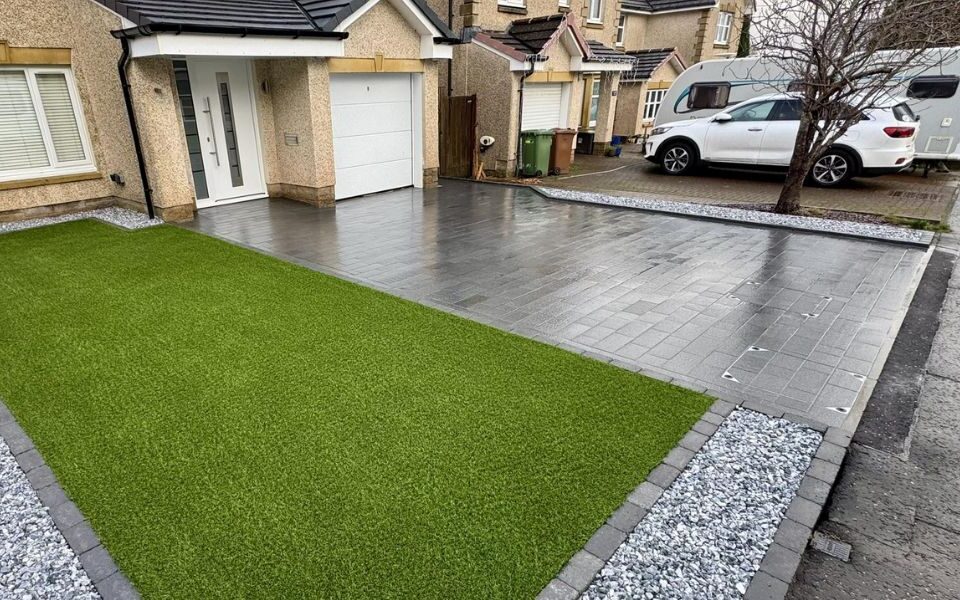
A wider driveway, where space allows, can make day-to-day use much easier. This is especially true if you drive a larger car, SUV, van or mobility vehicle.
For many homes, allowing closer to 2.7 to 3 metres can give more practical space for opening doors and walking around the vehicle without feeling squeezed.
If the available area is tight, careful layout planning can still make a big difference.
What About Space for Two Cars?
For two cars parked side by side, a driveway often needs to be around 4.8 to 5 metres wide as a starting point.
However, width is only part of the decision. The layout also needs to consider how both vehicles will be used. Some homes suit side by side parking, while others work better with one car parked behind another or a staggered layout.
If you are trying to create parking for two vehicles, read our full guide here:
Can You Fit Two Cars on Your Driveway?
That article looks in more detail at access, car doors, turning space, household movement and future-proofing the driveway.
Shared or Narrow Driveways
If your property has a shared entrance or tight boundary lines, driveway width becomes even more important.
You need enough room to avoid neighbouring vehicles, fences, walls and gates. You also need to think about safe pedestrian access, especially if the driveway sits close to the front door or a side path.
In some cases, small changes to the entrance, edging or surrounding landscaping can make the space easier to use.
Local authorities like Glasgow City Council and North Lanarkshire Council also offer guidance on dropped kerbs, crossover widths and access safety.
A narrow driveway does not always mean the design will not work. However, it does mean the layout needs more care. Our team at Neil Walker Driveways regularly works with narrow or restricted entrances. We can help you find smart layout solutions that meet safety requirements and look great.


Entrance Width and Access
The width of the driveway itself matters, but so does the entrance.
If the entrance is too narrow, drivers may need to turn in at an awkward angle. This can make parking harder and increase the risk of clipping kerbs, walls or planted areas.
Access is especially important where the driveway joins a busy road, narrow street or shared entrance.
Where a dropped kerb is involved, homeowners should also check the requirements with their local council before finalising the design.
Turning Zones and Easy Reversing
Some driveways benefit from a turning area, especially where reversing onto the road would feel awkward or unsafe.
A turning zone does not suit every property, as it needs enough space to work properly. However, where it can be included, it can make the driveway much easier to use.
Turning space may be useful if:
- The driveway leads onto a busy road
- The household has multiple drivers
- Larger vehicles need regular access
- Reversing out is difficult
- The driveway is long or angled
The aim is to make the driveway feel practical, not just make it fit.
Do Not Forget Everyday Movement
A driveway is part of the way you use your home every day.
That means the design should allow for more than parking. People still need to reach the front door, move bins, carry shopping and access side gates or garages.
This is where many driveway layouts fall short. The car may technically fit, but the space around it does not work properly.
When planning driveway width, think about how the front of the home is used on a normal day. That usually leads to a better design.
Need Help Planning Your Driveway Width?
Choosing the right driveway width can make a huge difference to your daily routine. A well-planned layout should make parking, walking and access feel simple.
At Neil Walker Driveways, we design driveways that fit your home, your vehicles and the way you use the space. Whether you have a narrow entrance, room for one car or plans for a larger driveway, we can help you create a layout that works properly.
With no upfront payments, a 5-year workmanship warranty and trusted service across Glasgow and the surrounding areas, you are in expert hands.