Planning a Driveway on a Slope: Drainage, Grip and Safe Access
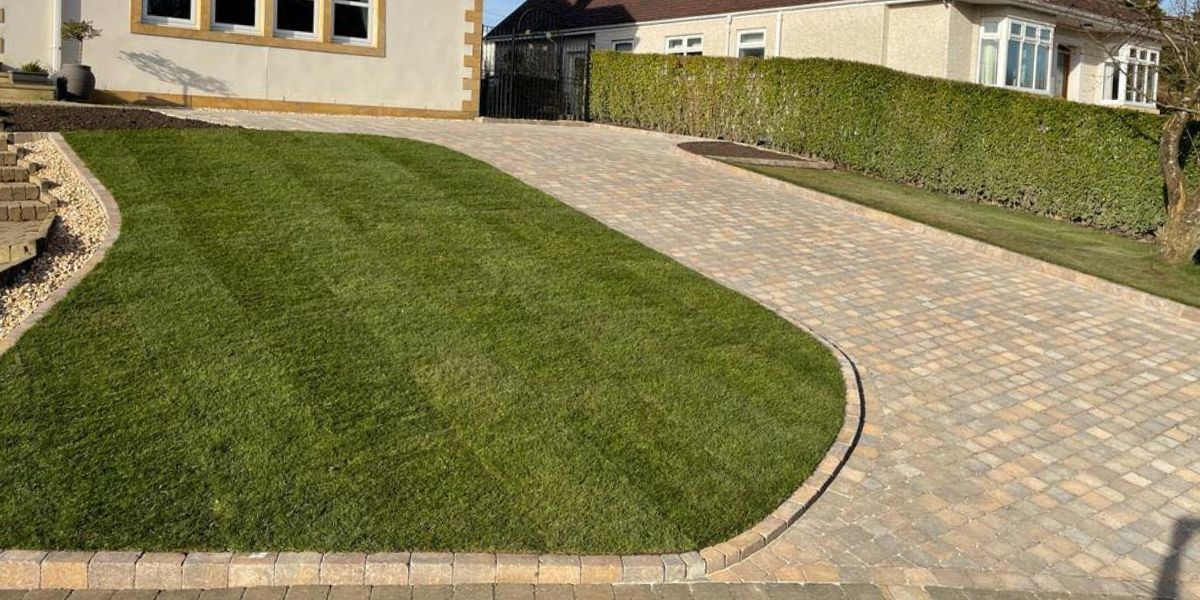
A sloping front garden does not prevent you from creating a practical and attractive driveway. However, it does mean the design needs more thought.
When planning a driveway on a slope, the gradient affects how vehicles enter the space, where rainwater travels and how safely people can move between the driveway and the house. The surface material, drainage system and surrounding landscaping must all work together.
A well-planned design can make the slope feel like a natural part of the property rather than a problem that needs to be worked around.
Start With the Existing Ground Levels
Before choosing paving colours or patterns, the existing levels need to be properly assessed.
Some slopes are gentle and require only small adjustments. Others may involve a significant change in height between the road and the house.
The design should consider:
- The direction and severity of the slope
- The position of the pavement and road
- Access to the front door
- Existing walls, steps and garden areas
- Where surface water will naturally travel
The amount of excavation and ground preparation required will depend on the individual site. In some cases, levels can be adjusted to create a smoother approach. However, steeper properties may need retaining features, additional drainage or carefully positioned steps.
Our driveway design and planning service considers how the whole front of the property needs to function before work begins.
Drainage Is Essential on a Driveway on a Slope
Water naturally travels downhill. Therefore, drainage is one of the most important parts of planning a sloping driveway.
Without a suitable system, rainwater may collect at the bottom of the driveway, run towards the house or reach the pavement and road. It can also carry loose dirt and debris across the surface.
The drainage design may include:
- Carefully planned falls and levels
- Drainage channels
- Permeable paving
- Soakaway systems where appropriate
- Kerbs or edging to help guide water
The right solution depends on the ground conditions, available space and direction of the slope.
Permeable surfaces may form part of the design because they allow water to filter through the driveway rather than travelling entirely across it. Our guide to permeable driveways explains how these systems work.
However, no single drainage solution suits every property. An experienced installer can advise on the correct choice for your property.
Choosing a Surface With Safe Grip
The material used on a driveway on a slope must provide a stable surface for both vehicles and pedestrians.
The appearance matters, but it should not be the only consideration. The texture of the surface, the gradient and the way the driveway will be used all affect the final choice.
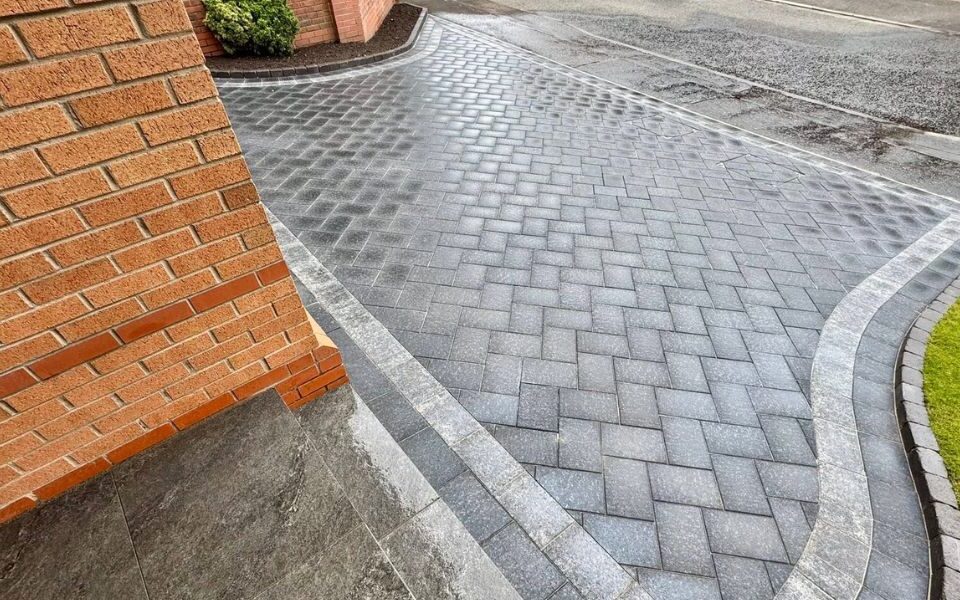
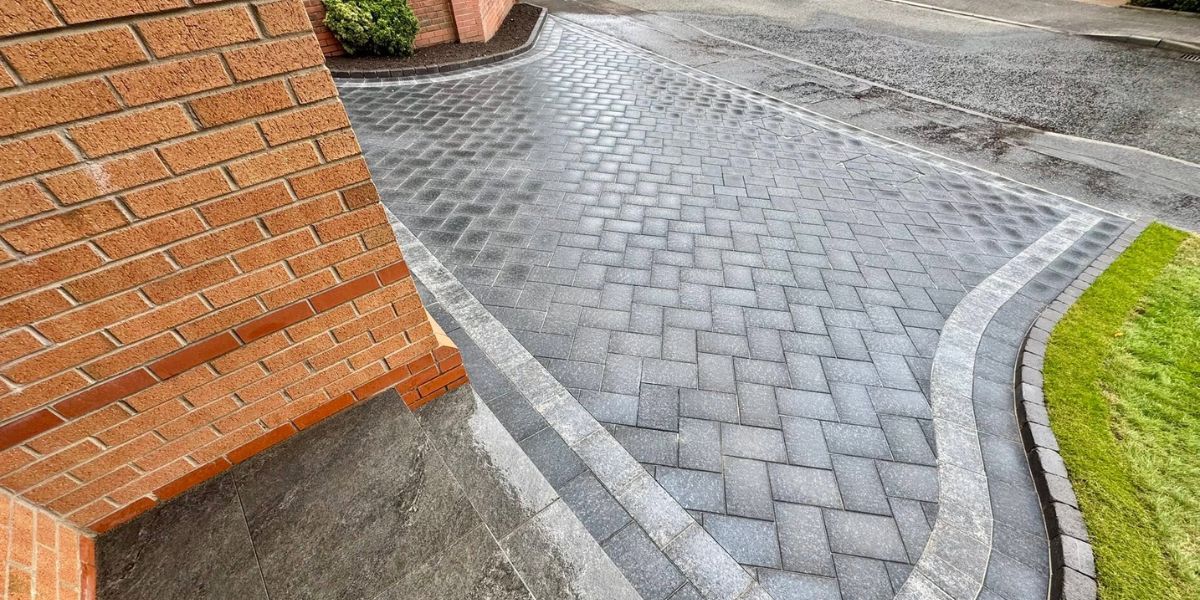
Block paving can provide a defined, textured finish and offers a wide range of colours and patterns. The laying pattern, edging and installation quality all contribute to the stability of the surface.
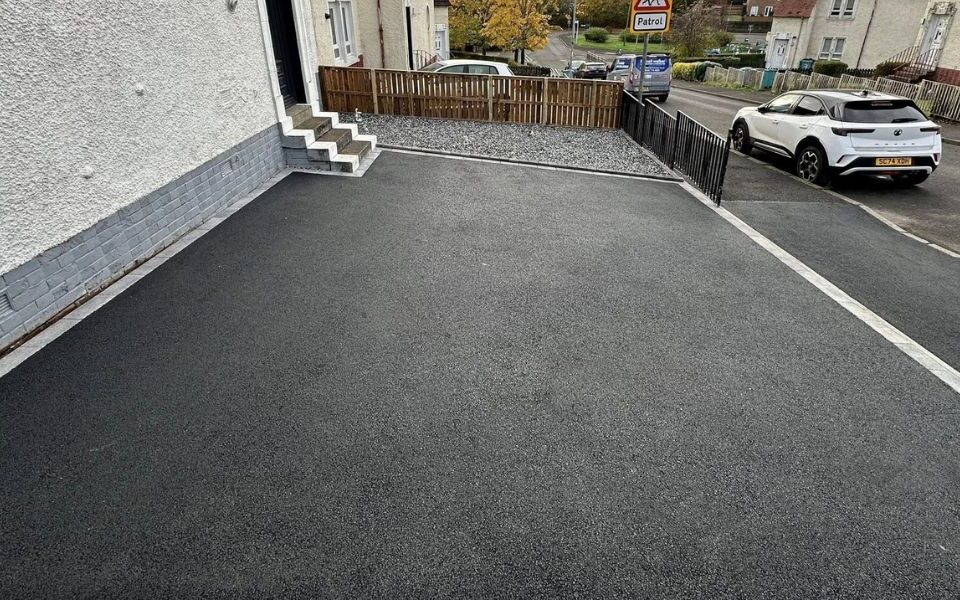
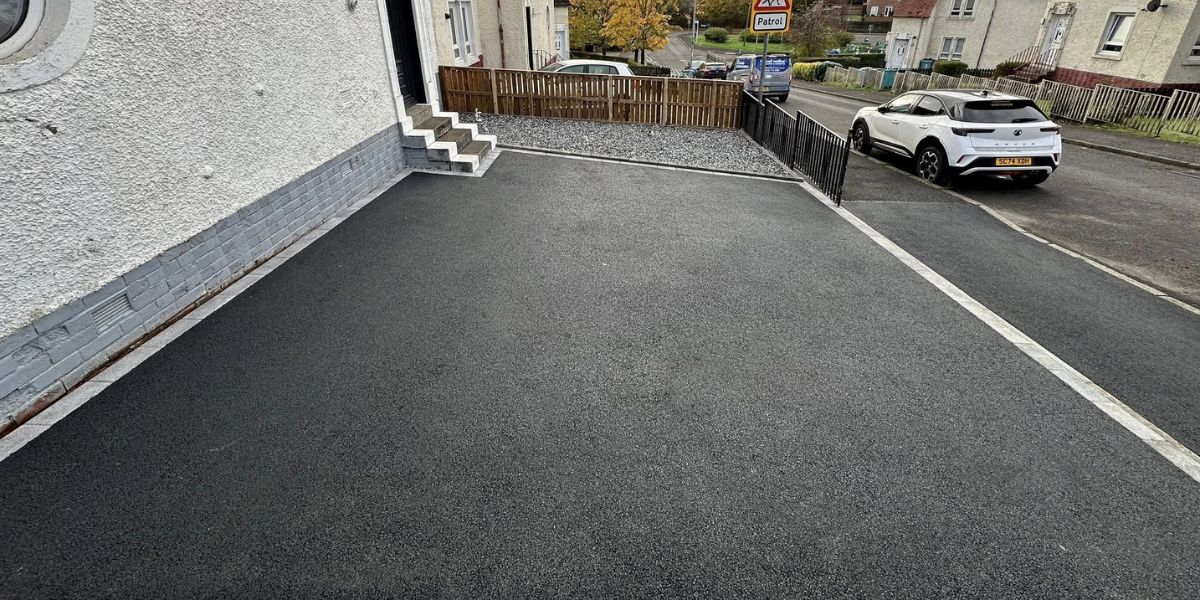
Tarmac can also work well on sloping sites because it creates a smooth, continuous finish. You can combine it with block borders to add definition and connect the driveway with nearby paths or steps. Find out more about our tarmac driveway installations.
Whichever surface you choose, regular cleaning remains important. Moss, algae and wet leaves can make outdoor surfaces more slippery, particularly in shaded areas.
Safe Vehicle Access Requires Careful Planning
A driveway must allow vehicles to enter, leave and park without unnecessary difficulty.
On a slope, the points where the driveway meets the road and levels out near the property need particular attention. A sudden change in height can cause low vehicles to scrape underneath or make access feel uncomfortable.
The design should also provide enough space for drivers to:
- Enter without taking an awkward angle
- Open doors safely after parking
- See pedestrians using the pavement
- Reverse or turn where the available area allows
- Avoid walls, steps and planted areas
A wider entrance may improve access on some properties. However, this must be balanced with the position of the pavement, boundary walls and surrounding landscaping.
Do Not Forget Pedestrian Access
Driveway planning often focuses on cars, but people also need a safe and comfortable route to walk to the house.
Walking directly up a steep driveway may be difficult, especially during wet or icy weather. A separate path or a series of well-positioned steps can make access easier.
Useful features may include:
- A path with a gentler gradient
- Steps with consistent heights
- Handrails where needed
- Clear edges between driving and walking areas
- Lighting around entrances and level changes
Paths, steps and the main driveway should feel like one joined-up design. Using related paving materials or matching borders can help bring the different areas together.
Retaining Walls, Kerbs and Landscaping
Some sloping sites need additional features to manage changes in level.
Retaining walls can support raised garden areas and help create a more usable driveway space. Kerbs and edging can define the surface while helping to separate it from lawns, paths and planted borders.
However, these features should not be treated as decorative additions alone. Their position may affect drainage, visibility and the amount of space available for vehicles.
Soft landscaping can also help a sloping front garden feel less dominated by paving. Carefully planned planting areas can add colour and soften retaining walls without restricting access.
Every Sloping Driveway Needs an Individual Design
There is no standard design for a driveway on a slope. Two properties on the same street can have different ground conditions, access points and drainage requirements.
That is why the planning stage matters. A suitable design should balance:
- Safe vehicle access
- Reliable drainage
- Surface grip
- Comfortable pedestrian routes
- Long-term stability
- The appearance of the property
Trying to force a standard driveway layout onto a sloping site can create practical problems. Instead, the design should work with the levels and needs of the individual home.
Planning a Driveway on a Sloping Property?
A slope can add complexity to a driveway installation, but it can also create opportunities for an interesting and well-defined design.
Neil Walker Driveways designs and installs custom driveways across Glasgow and surrounding areas. Our team manages the groundwork, drainage, paving, kerbs and landscaping required to complete the wider space.
We do not ask for upfront payments and every installation includes a 5-year workmanship warranty.