Can You Extend an Existing Driveway? What Homeowners Should Consider
A second car, a larger vehicle or an awkward parking space can make an existing driveway feel too small. Extending it may give you the room you need while retaining part of what is already there.
You can often extend an existing driveway, provided the available space, ground conditions, drainage and access allow it. However, the condition of the current driveway matters too. Adding a new section beside a failing surface may leave problems that still need addressing.
For homeowners in Glasgow and surrounding areas, the first step is understanding what can be retained and what the extension will involve.
Do You Need Planning Permission to Extend a Driveway in Scotland?
Some driveway extensions can fall within permitted development rights, allowing the work without a planning application. However, the proposal must meet the applicable conditions.
For a hard surface between a house and a road, Scottish guidance requires a porous surface or provision to direct runoff to a porous area within the property. The guidance also requires planning permission for hard surfaces in conservation areas and within the grounds of listed buildings. These provisions concern houses, so owners of flats should check separately with their council. Scottish Government guidance on hard surfaces
Before work starts, confirm what applies to your property, including any restrictions on permitted development rights. The wider requirements for driveway planning permission in Scotland also matter when the project involves other changes.
Can the Existing Driveway Stay?
An installer should assess the current driveway before recommending an extension.
A sound surface with suitable support may provide a useful starting point. Persistent sinking, significant cracking or standing water needs closer investigation.
The assessment should consider:
- The condition of the existing surface and supporting layers
- Ground levels across the proposed extension
- Where rainwater currently flows
- How the new section will meet the old driveway
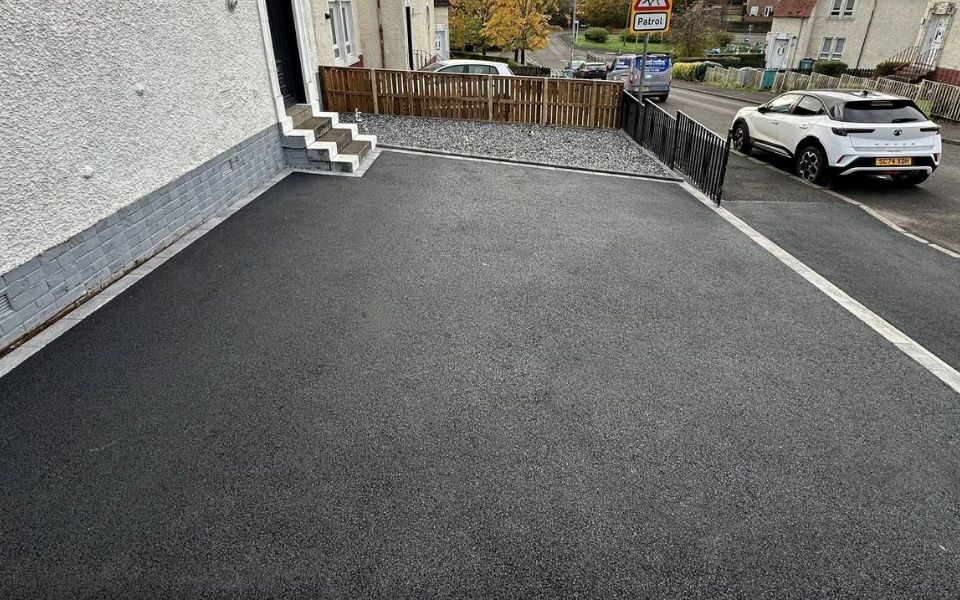
Converting an adjacent lawn into parking requires proper excavation and preparation for vehicle loads. The new section needs its own suitable foundation, even when the existing driveway remains.
Will the New Surface Match the Old Driveway?
Matching materials can be one of the most noticeable challenges.
Existing blocks may have faded or weathered. Even if the same product remains available, new paving may look different beside it. Cleaning the old surface can help you assess its colour, but an exact match may still be difficult.
Fresh tarmac will also usually look different from an older surface. Discuss how the join will be positioned and what the finished driveway is likely to look like.
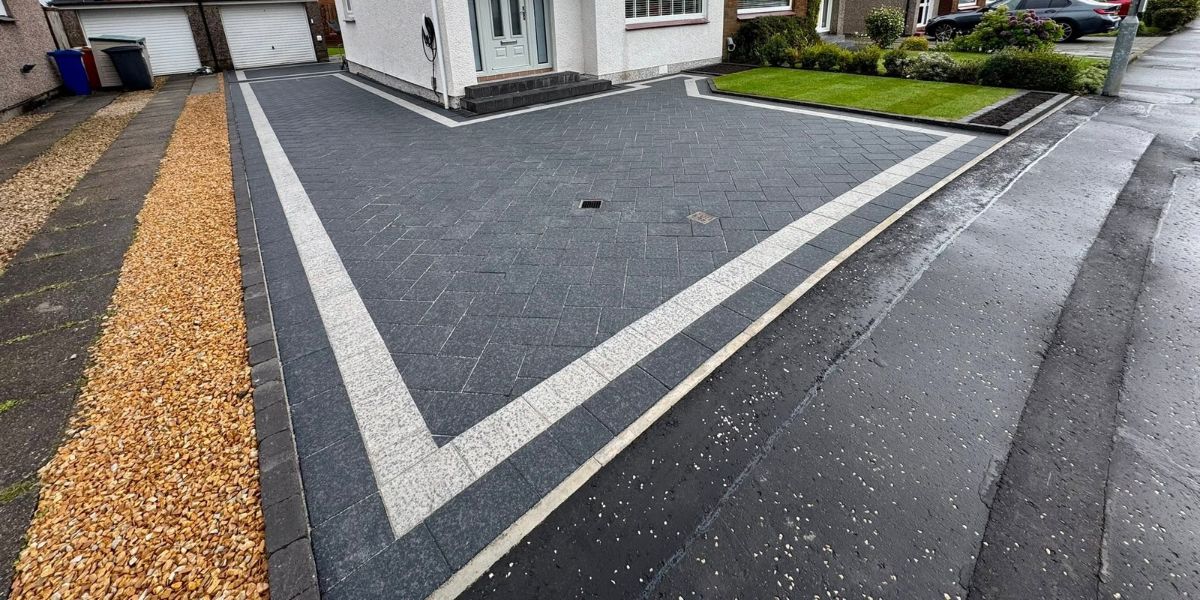
A contrasting border or clearly defined parking bay may make the extension feel intentional. In some cases, relaying part of the existing paving can help integrate the layout.
Will the Extra Space Work for Parking?
Think about how you will use the enlarged driveway before deciding its shape.
If the aim is a second parking space, both cars need room for doors, passengers and everyday access. Bins, steps and the route to the front door also need consideration.
Different two-car driveway layouts suit different frontages. A wider paved area may still feel awkward if the entrance makes manoeuvring difficult.
If the extension takes in part of the garden, consider what planting or boundary features you want to retain.
How Will the Extension Affect Drainage?
Adding a hard surface can change how rainwater moves across the property.
The design needs to account for the new area and its relationship with the existing driveway. Levels at the join should help water reach the intended drainage point.
A permeable surface also needs suitable construction beneath it. Choosing permeable blocks alone does not establish how the complete driveway will manage rainwater.
Ask your installer to explain the proposed drainage arrangement before agreeing to the work.
Do You Need to Widen the Entrance or Dropped Kerb?
Extending the parking area within your garden and changing access across the pavement involve separate considerations.
If the project requires a wider dropped kerb or a new crossing, check the process with your council’s roads department. Glasgow City Council has a separate footway-crossing application and advises resolving any driveway planning requirements before applying. Glasgow City Council footway-crossing application
An existing crossing does not automatically cover a proposed alteration. Discuss the intended entrance width and vehicle movements with the council before finalising the design.
Is an Extension Better Value Than Replacement?
Retaining a sound driveway may reduce the amount of existing material that needs removing. However, the extension still requires preparation, drainage and appropriate finishing at the join.
Replacement may make more sense where the existing driveway has widespread defects, unsuitable levels or a layout that needs substantial change.
Ask for a clear explanation of both options where relevant. Compare the work included, the expected appearance and any issues that would remain with the older section.
Planning a Driveway Extension in Glasgow?
Neil Walker Driveways designs and installs driveways across Glasgow and surrounding areas. With over 20 years’ experience, award-winning workmanship and a 5-year workmanship warranty, we can help you assess the options for your property.
We do not ask for upfront payments. Whether you want additional parking or easier access, we can discuss whether an extension or a wider redesign would suit your home.